

NFPA 101 · Florida Fire Prevention Code · Hourly logs · On post in 2–4 hours
FIRE WATCH, ON POST WITHIN 2 TO 4 HOURS.
When your alarm, sprinkler, or pump goes down, the code does not wait — and neither do we. One call puts a logged, licensed fire watch on your property. And the man who answers that call is the owner.
When you need one
IF ANY OF THESE IS TRUE, YOU NEED A FIRE WATCH NOW.
THE SYSTEM IS IMPAIRED
Your fire alarm or sprinkler system has been down more than 4 hours — 10 in some occupancies. The Florida Fire Prevention Code requires a watch until it is restored.
THE MARSHAL ORDERED ONE
After an inspection, after an incident, or for the duration of construction on the property.
HOT WORK IS UNDERWAY
Welding, torching, roofing — anything that puts an open flame in the building.
LIFE-SAFETY POWER IS OUT
The building lost power to the systems that would otherwise raise the alarm.
Skipping it risks fines, liability, and in some cases an order to vacate. A watch costs less than any of those.
Do you need one right now?
CHECK THE CLOCK.
Impairment thresholds are not the same for every system, and the post you need is not the same for every building. Set the four values below.
Thresholds reflect common NFPA and Florida Fire Prevention Code impairment rules — broadly 4 hours for fire alarm and 10 hours for water-based systems within a 24-hour period. Post counts and round frequency are Foxtrot’s own deployment practice, not code. None of this is a code determination: your Authority Having Jurisdiction and fire marshal decide what your building requires.

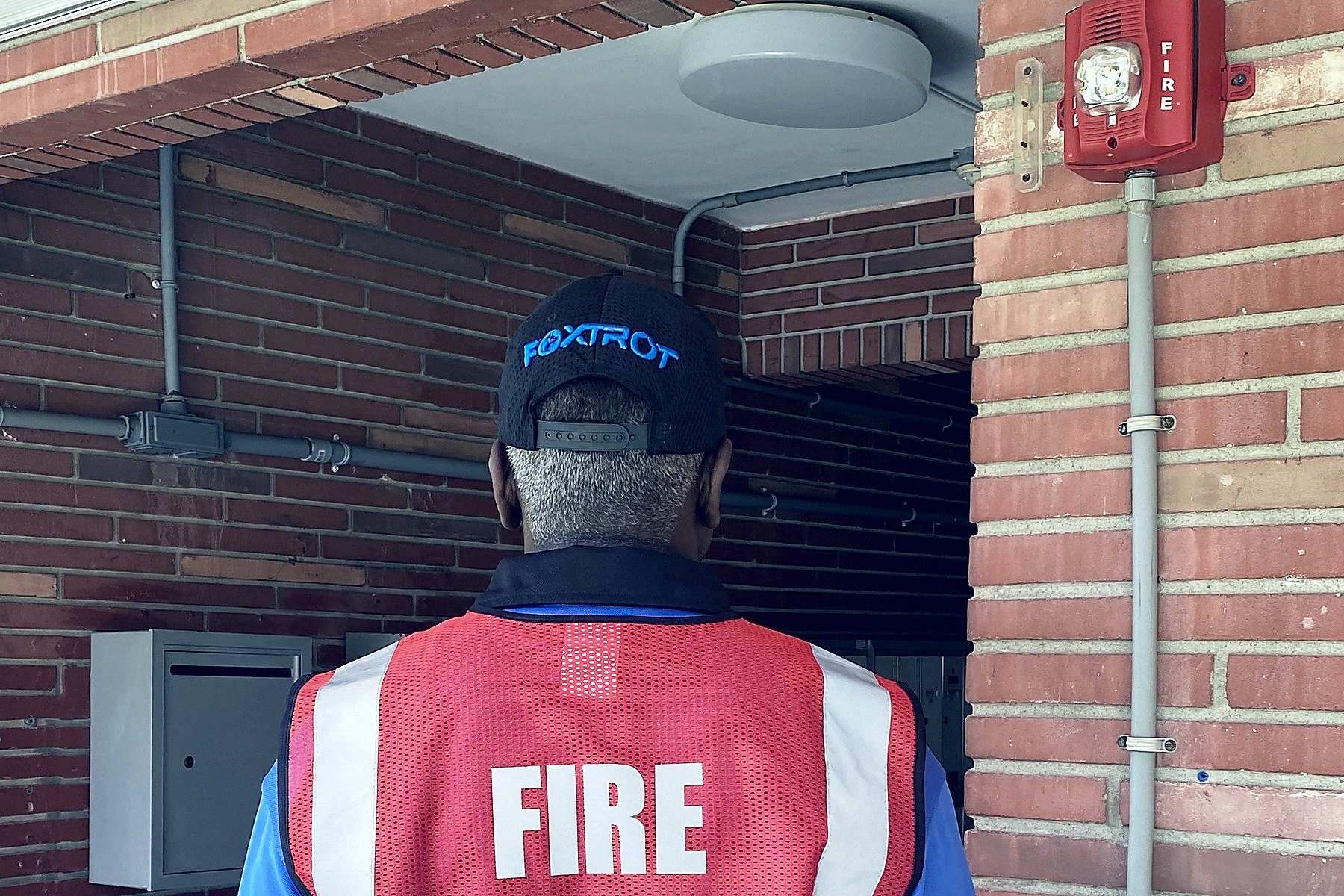
Fire watch detail · Hallandale Beach condominium, June 2026
What the watch looks like
WHAT THE OFFICER IS ACTUALLY THERE TO DO.
ROUTINE PATROLS OF THE IMPAIRED AREA
Every 30 or 60 minutes depending on the occupancy — through the area the failed system was protecting, not a token lap of the lobby.
THE LOG, KEPT FOR TWO AUDIENCES
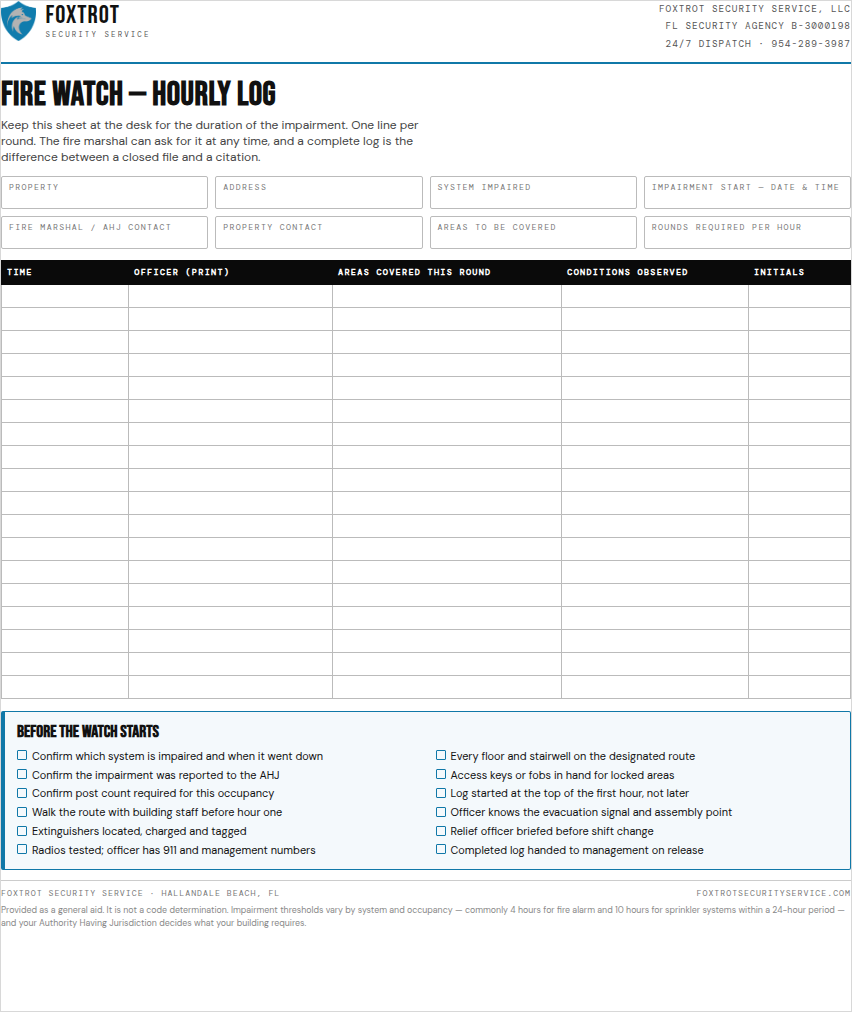
Maintained for the fire marshal and for your property manager. Each round recorded by hand, each area marked clear, handed over at the end of every shift.
EMERGENCY EXITS KEPT CLEAR
Checked on every pass. When the alarm system is the thing that is down, the way out is the thing that matters most.
DISPATCH OR 911, THEN A REPORT
If something happens on a round the officer raises it by hand, calls it in, and writes it up. You are not finding out about it later.
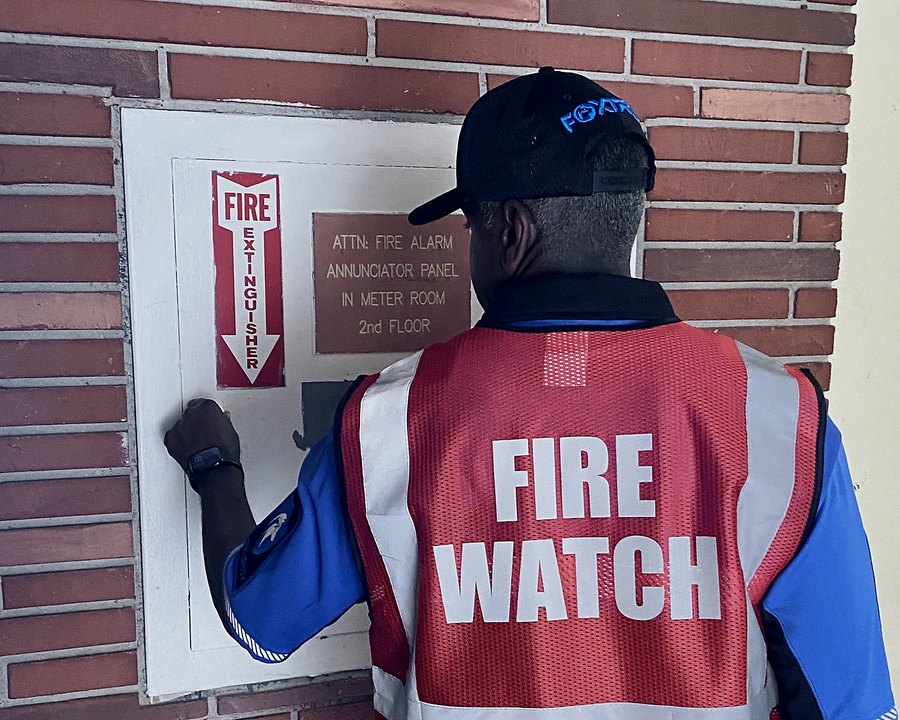
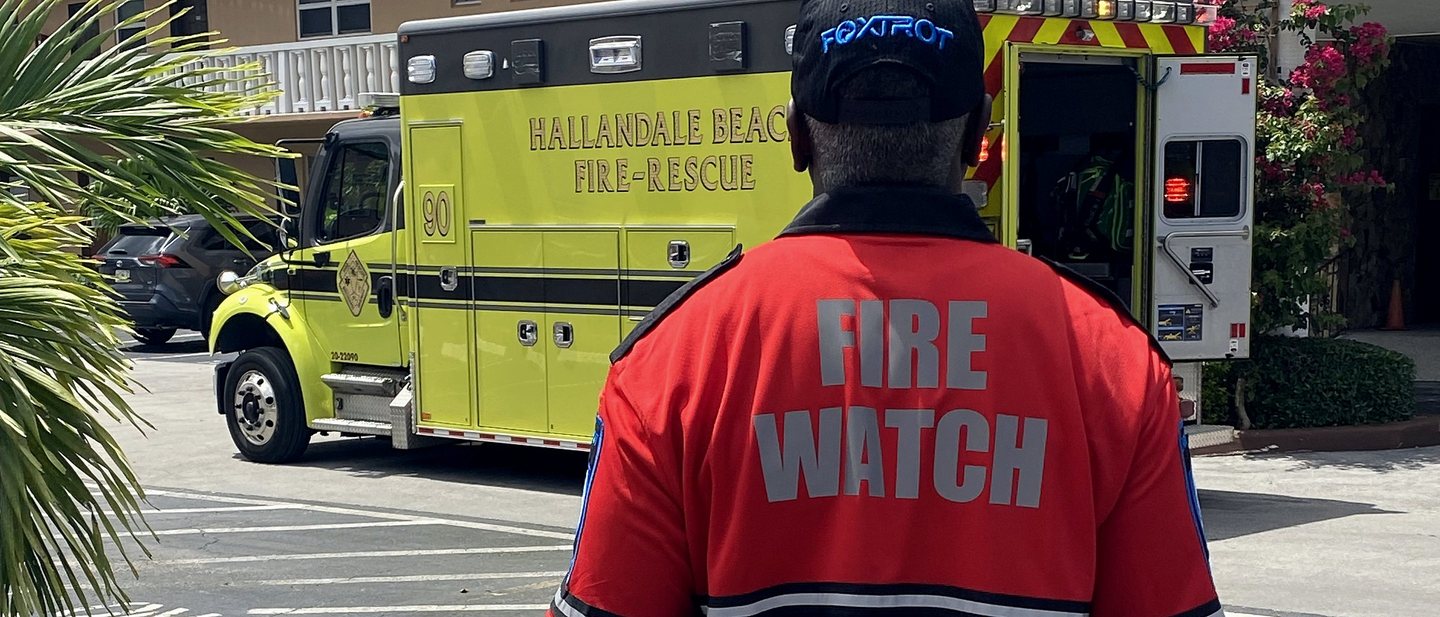
In June 2026, Foxtrot ran a full fire watch at a Hallandale Beach condominium — officers at the alarm panels, hourly logs running, Hallandale Beach Fire-Rescue on scene. The photographs on this page are from that detail.
The direct line
AT 2 AM, SOMEBODY WHO CAN DECIDE PICKS UP.
No call center. No answering service. No callback in the morning. The line reaches the owner or the operations manager — someone who can confirm the post count your occupancy requires and commit officers on that call.
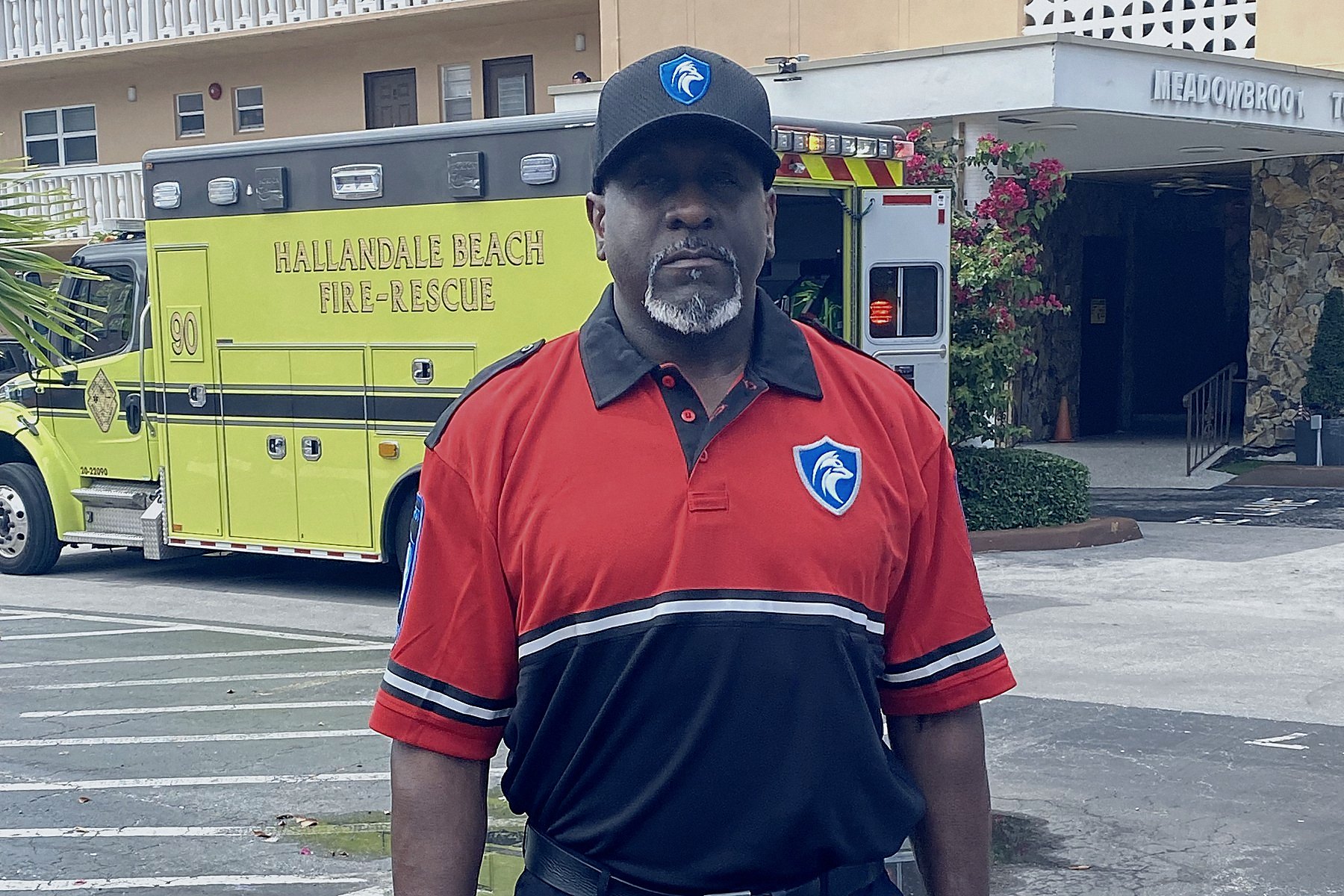
Hallandale Beach Fire-Rescue on scene · June 2026
Anatomy of a watch
WHAT THE NIGHT ACTUALLY LOOKS LIKE.
- 11:04 PM
The call comes in
Alarm panel in trouble, monitoring company already notified. The owner or the operations manager answers it directly — no call center, no callback in the morning.
- 11:09 PM
Post count confirmed
We establish what your occupancy requires — how many officers, which floors, what the marshal will expect to see.
- Within 2–4 hrs
The officer arrives with the log
Licensed and in uniform, carrying the fire watch log book, an extinguisher, a radio and your emergency contact list. The paperwork shows up with him, not afterward.
- First thing on site
Briefed by the marshal or your manager
Before a single round is walked, the officer takes the brief on this specific detail — which system is down, which areas it covers, what the marshal wants watched.
- Every 30 or 60 min
Rounds on the impaired area
Not a lap of the building — continuous rounds through the area the failed system was protecting, at the interval the occupancy calls for. Emergency exits checked clear on every pass.
- After every round
Written down, by hand
The officer logs each round and records the area clear. Paper the fire marshal can read, entry by entry, with no gaps for anyone to question later.
- If something happens
Dispatch or 911, then a written report
The officer raises the alarm by hand, calls it in, and files a written incident report. You are not learning about it on Monday.
- End of every shift
The log goes to your manager
Not at the end of the watch — the end of each shift. You hold the record the whole way through, not just when it is over.
- When released
And not before
The watch ends when the system is restored and the marshal says so. You keep the completed log for your file.
Free download
THE FIRE WATCH LOG THE MARSHAL WANTS TO SEE.
A blank, code-aligned hourly log sheet plus the one-page checklist of what has to be recorded. Print it, keep it at the desk, hand it over when you are asked. No charge, whether you hire us or not.
On its way. Check your inbox — and you can grab it directly here: Download the log sheet (PDF)
Call now
THE MARSHAL'S CLOCK IS RUNNING. OURS ISN'T THE PROBLEM.
We will confirm the post count your occupancy requires, dispatch, and start the log.